
National Survey Missing Older Women’s Caregiving Experiences

Updated: 5 days ago
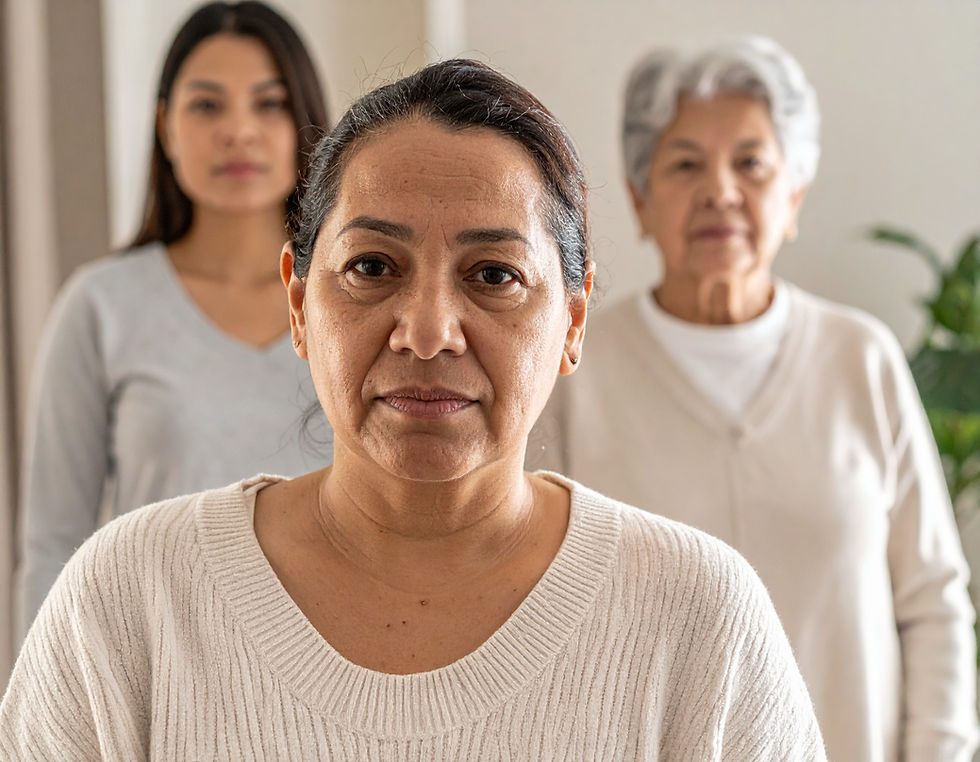
Recently, Forbes posted a story entitled “Women Exiting Workforce at Record Pace, New Catalyst Data Reveals Why” that listed caregiving as one of the key factors, according to a national survey. While survey respondents may have been older women who mentioned their responsibilities for other forms of caregiving (eldercare, etc.), the study’s authors chose only to highlight childcare.
The Forbes story described a national survey conducted by Catalyst. That survey was based on the fact that more than 455,000 women left the United States’ workforce between January and August of 2025.
The Catalyst findings state:
“42% of women who voluntarily left their jobs reported that caregiving responsibilities, including the cost of childcare, drove their decision to exit the workforce.”
Women who voluntarily left their jobs were more likely to have worked in organizations without flexible schedules as compared to women who remained working.
A Limited Point of View

While the story is important for women overall, the way the research findings are written appears to leave a huge gap through omitting the challenges faced by older women, many of whom are past raising young children but who are in caregiving roles that are not focused on young children. This can include older women providing care for family elders, adult children or family members with disabilities, and friends.
We at I Start Wondering believe the cost and time necessary for a parent to raise a healthy, well-adjusted child is important to this nation’s future, but so is eldercare—and the latter is only going to become more pressing as the United States’ population ages. In fact, the US median’s age is on the rise, surpassing 39 in 2024, according to the U.S. Census Bureau. (In comparison, the median age was 37.9 for the period from 2014-2018.)
That’s important to note. “In particular, middle-aged and older adults provide a substantial portion of this care in the US, as they care for children, parents, or spouses,” according to a 2018 document published by the National Association of Chronic Disease Directors and the Centers for Disease Control and Prevention.
Other findings from this CDC publication include:
The percentage of adults who are age 45 and older who reported being a caregiver to a friend or family member ranged from 28% in Wyoming to 15% in South Dakota.
Over 22% of adults reported providing care or assistance to a friend or family member over the past 30 days.
24.4% of adults aged 45-64 are caregivers, compared to 18.8% of adults age 65 and older.
One in four women are caregivers; in comparison, one in five men serve in this role.
One in three caregivers provided 20 or more hours of care per week.
53% of caregivers have given care or assistance for 24 months or more.
24% of adults with post-high school education are caregivers, as compared to 21.8% with high school education and 15.9% with less than a high school education.
The estimated future caregivers aged 45 and older who expected to be caregivers within the next two years ranged from 20% in Texas, New York, and Florida to 8.5% in Puerto Rico.
These results serve as a reminder that caregiving is a wider societal issue beyond parents providing childcare and that this issue is a critical one for policymakers and organizations to consider in a holistic manner.
Every member of the I Start Wondering team has been or is currently serving as a caregiver beyond being in a parental role for young children. We realize that it takes a lot out of the individual caregiver, both in time, money, and energy. So while we recognize that younger women are stepping away from the workforce to care for their children and believe that organizational policies should be created to provide appropriate support, we also want to remind our readers, organizations, and policymakers that the role of caregiving is wider and has a broader impact personally on all women, no matter what their age, as well as organizationally and economically.


Comments